📅 18th of November 2026
📍 Jade University of Applied Sciences Wilhelmshaven
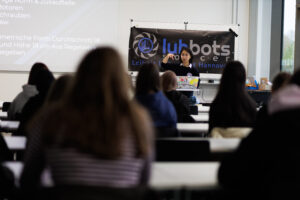
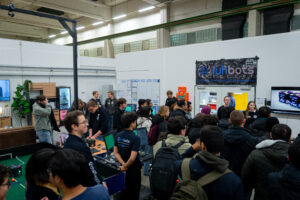
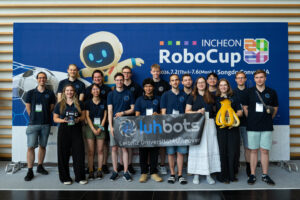
In November 2026, we were once again able to take part in the Robot Design Challenge at Jade University of Applied Sciences in Wilhelmshaven!
What is the Robot Design Challenge?
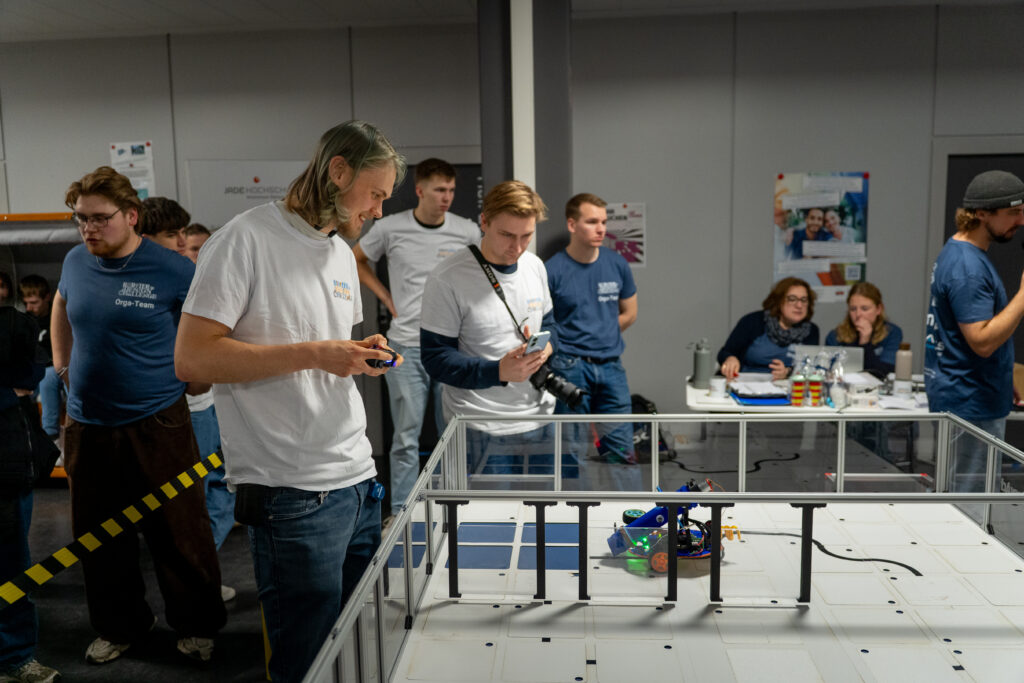
The Robot Design Challenge is an annual engineering competition for school pupils, university students and anyone who enjoys robotics. As part of the Jade Careers Day, teams of two to three people compete against one another to develop a robot capable of performing a wide variety of tasks.
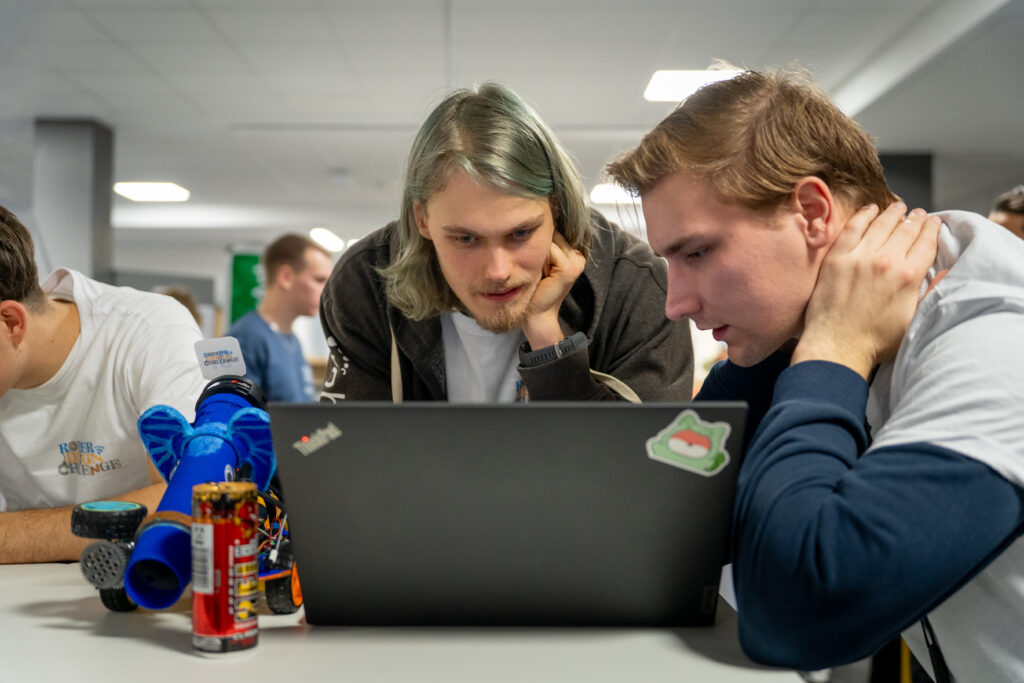
All teams start with the same kit, which is sent out a few weeks before the event and contains a wide range of components: motors, sensors, LEDs, circuit boards, a controller and much more. During this build phase, teams tinker, design, test and optimise their creations. The key feature is that the kit and tasks change every year, meaning that new technical and creative solutions are always required.
The competition: What must the robots be capable of?
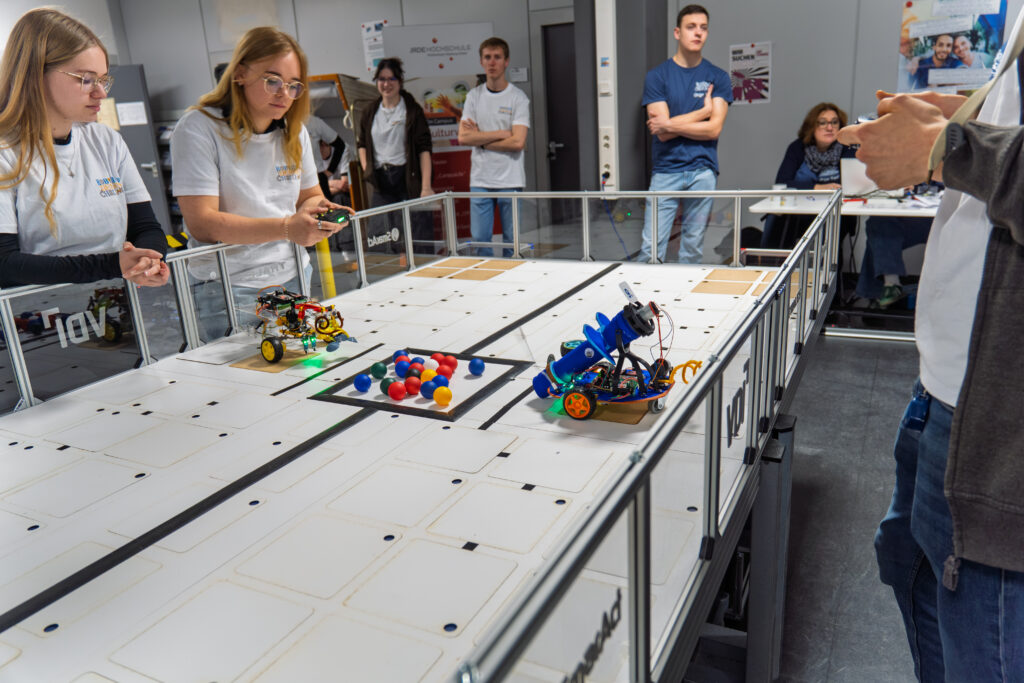
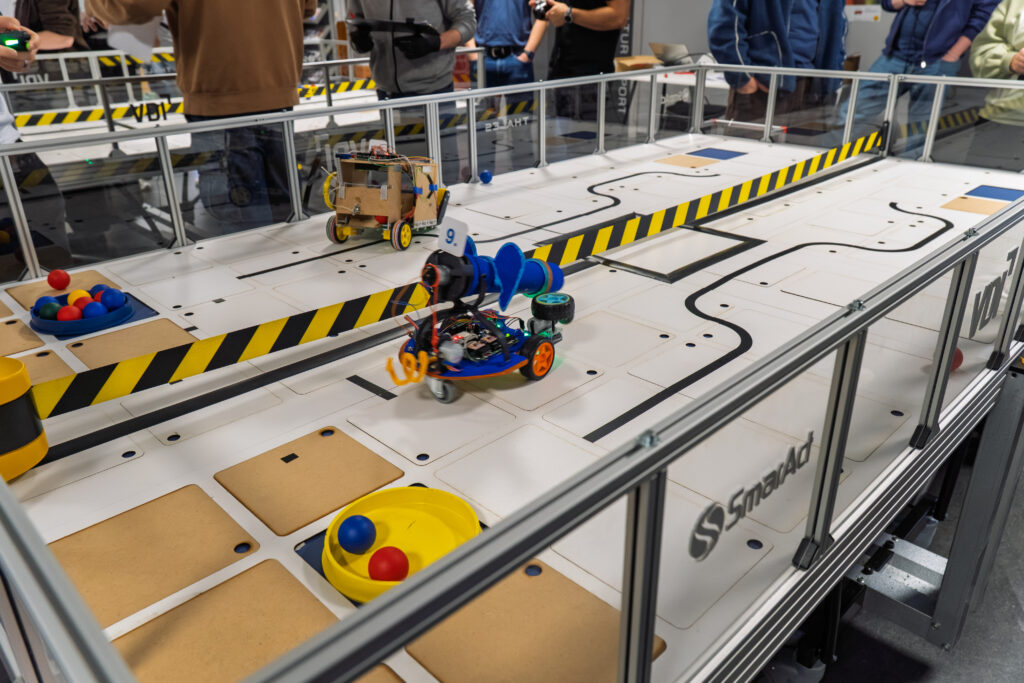
As part of various challenges, the robots had to complete a range of tasks this year, such as:
- autonomously follow a black line on the floor
- Freeing table tennis balls from tricky situations
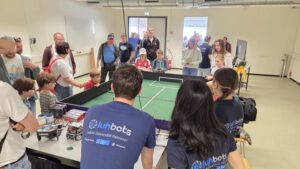
- In a duel against another robot, pick up table tennis balls, transport them and unload them back into your own half
Alongside this competition, there is also a presentation of the robot. During the presentation, the team demonstrates the robot’s key functions and explains the ideas behind them.
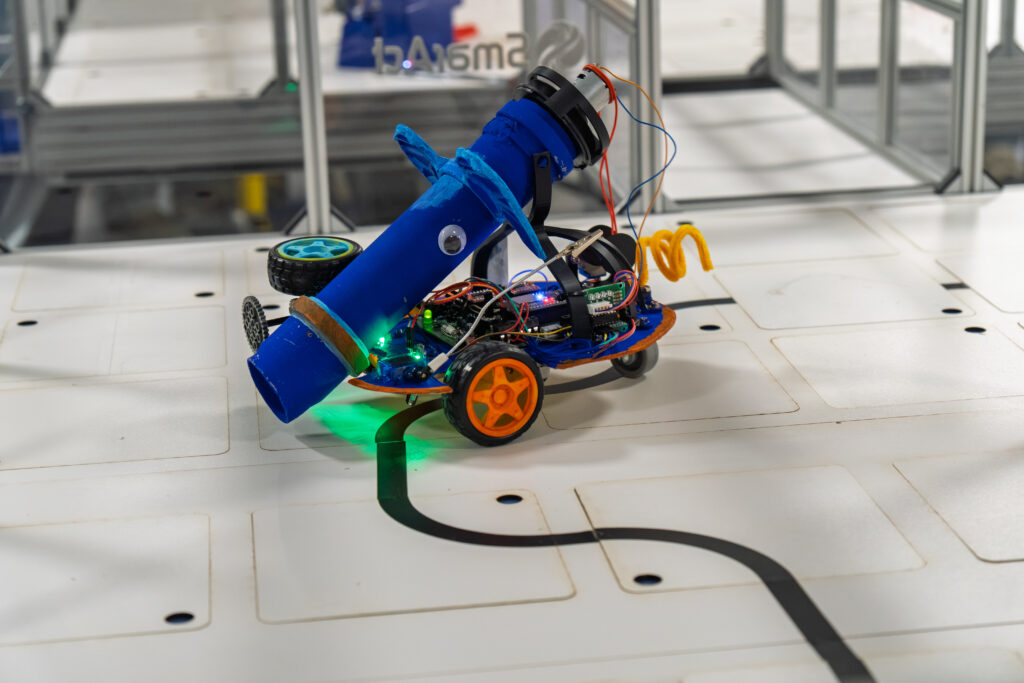
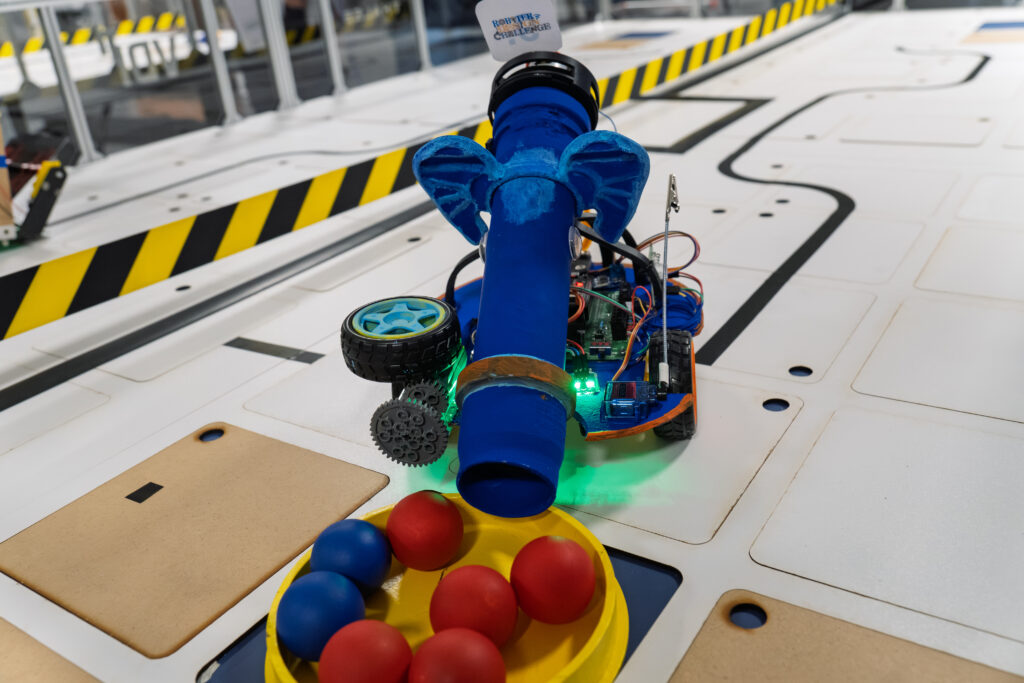
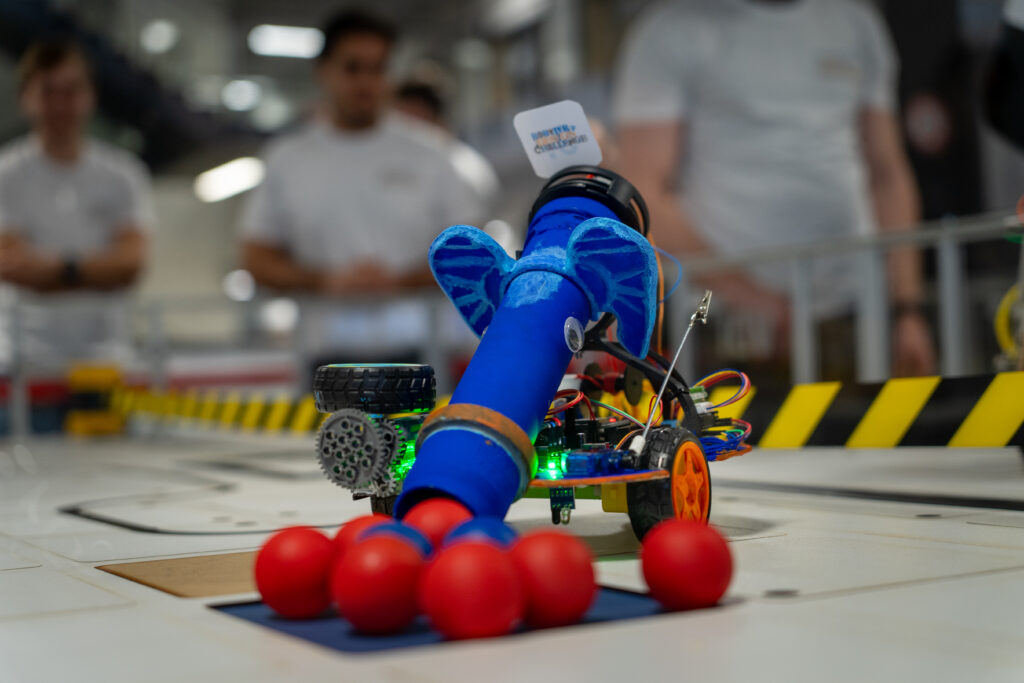
What did our robot look like?
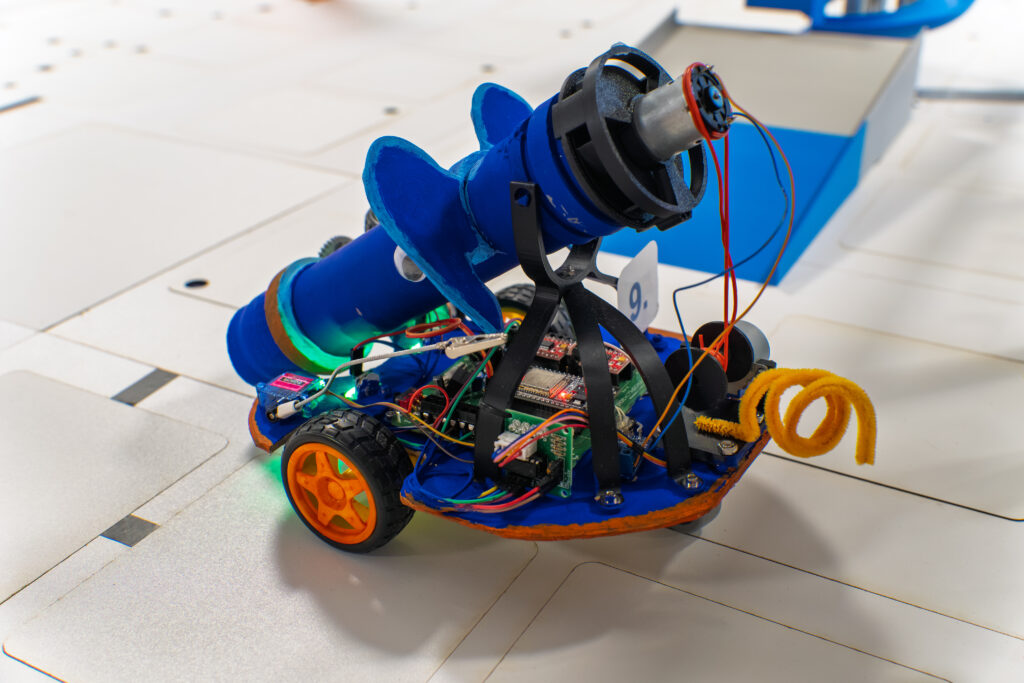
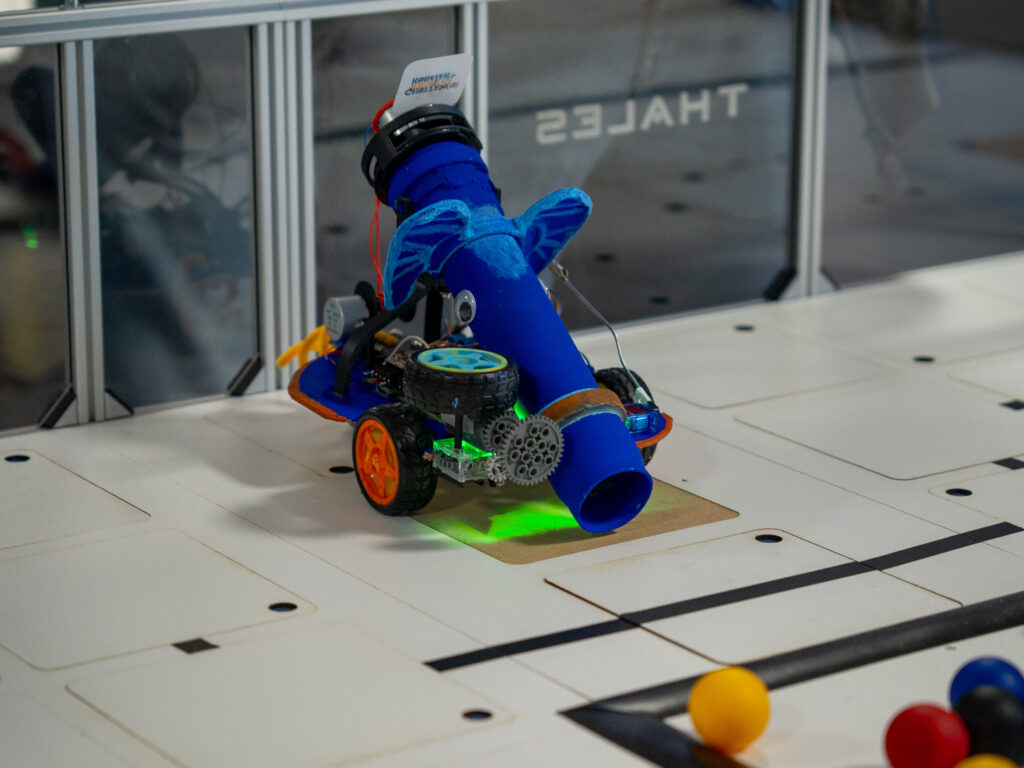
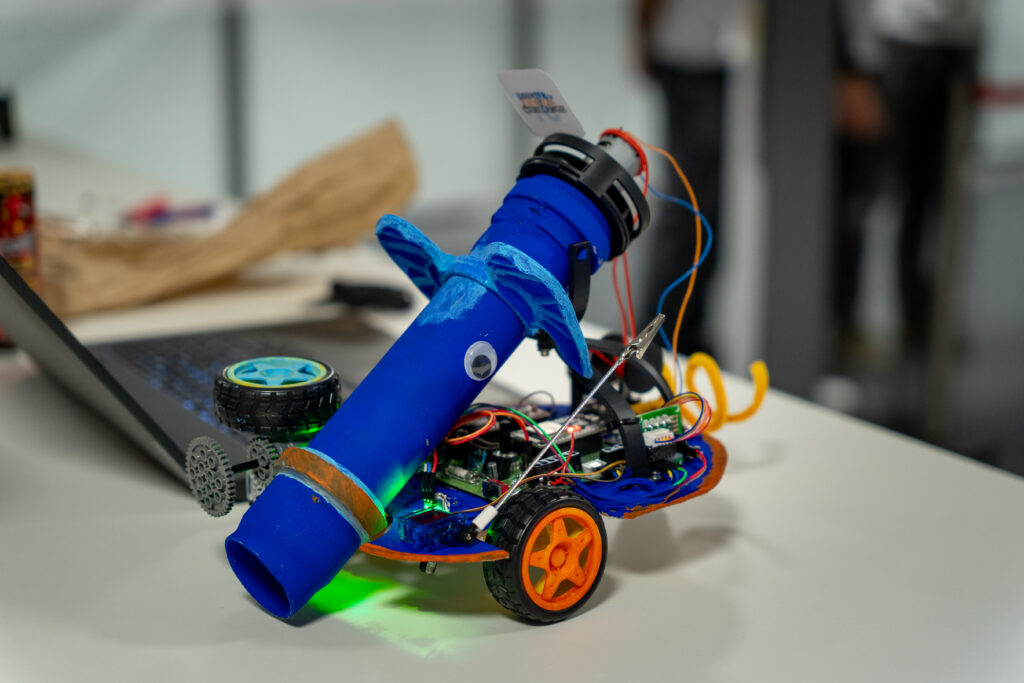
The design of our robot was inspired by the little blue elephant from the TV programme Die Sendung mit der Maus. It was called “Schnüfflofant” (yes, yes, very original) and was equipped with seven key components:
- The Trunk: To carry as many balls as possible, we have fitted a tube to the robot that can hold up to seven balls. At the same time, the trunk provides space for the Schnüfflofant’s ears, which are an essential part of its design.
- The Drummer: There isn’t much music played here, but there’s plenty of pulling going on! A pulley with a cable allows us to adjust the height of the trunk. This means that balls can also be placed in higher shelves.
- The Drive-Wheel: Thanks to its two front motors and the universal swivel castor at the rear of the robot, it can navigate quickly in all directions and is able to turn freely on the spot.
- Universal Rollator: Consisting of a horizontal and a vertical actuator, the Schnüfflofant can therefore operate all specified ball dispensers.
- The Spinner: Here we have a radial fan design optimised for maximum suction power. The rotor design is modelled on that of a robot vacuum cleaner. Care has also been taken to use the 3D-printing filament as sparingly as possible so as not to exceed the permitted total limit.
- The Eyes: Two infrared sensors are fitted underneath the robot, enabling the Schnüfflofant to follow a path autonomously. This capability presented a particular challenge for this year’s robots, designed to place greater demands on the software.
- Sir Piks-A-Lot: As a tribute to Sir Lancelot from last year, our robot is fitted with a small lance for similar reasons (a spare servo motor that had already proved its worth in the last competition). This was intended to serve as a multi-purpose tool.
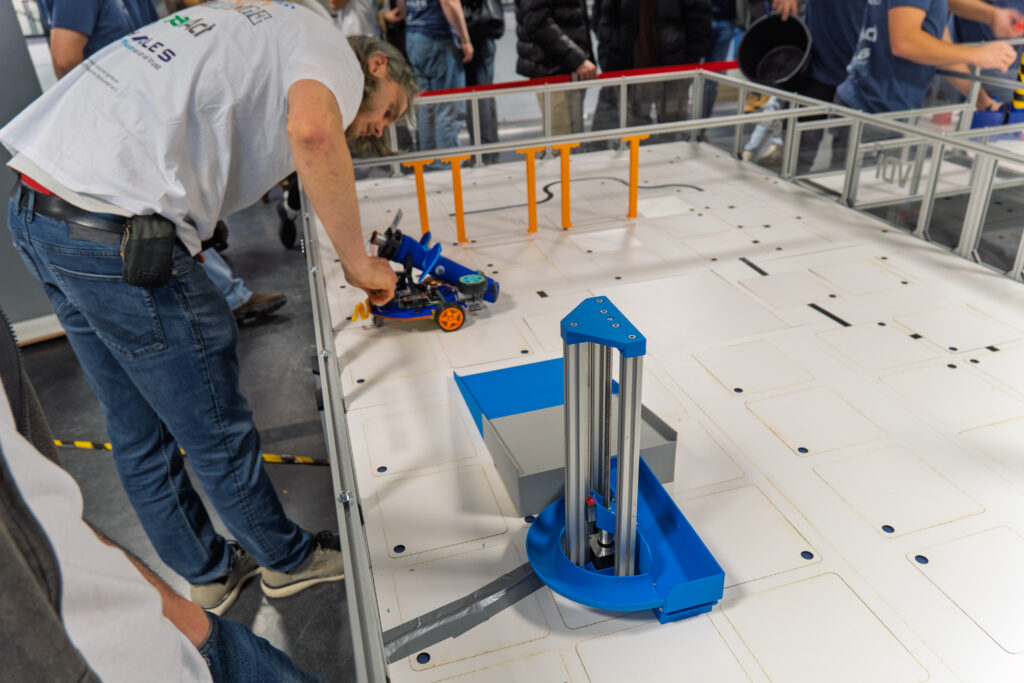
How did it go?
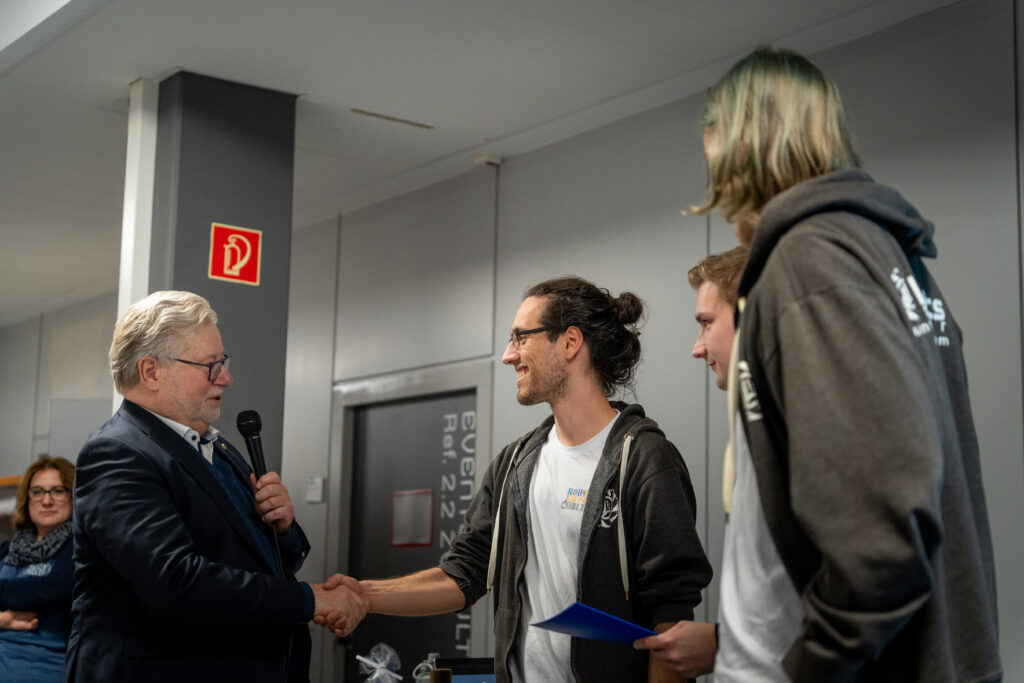
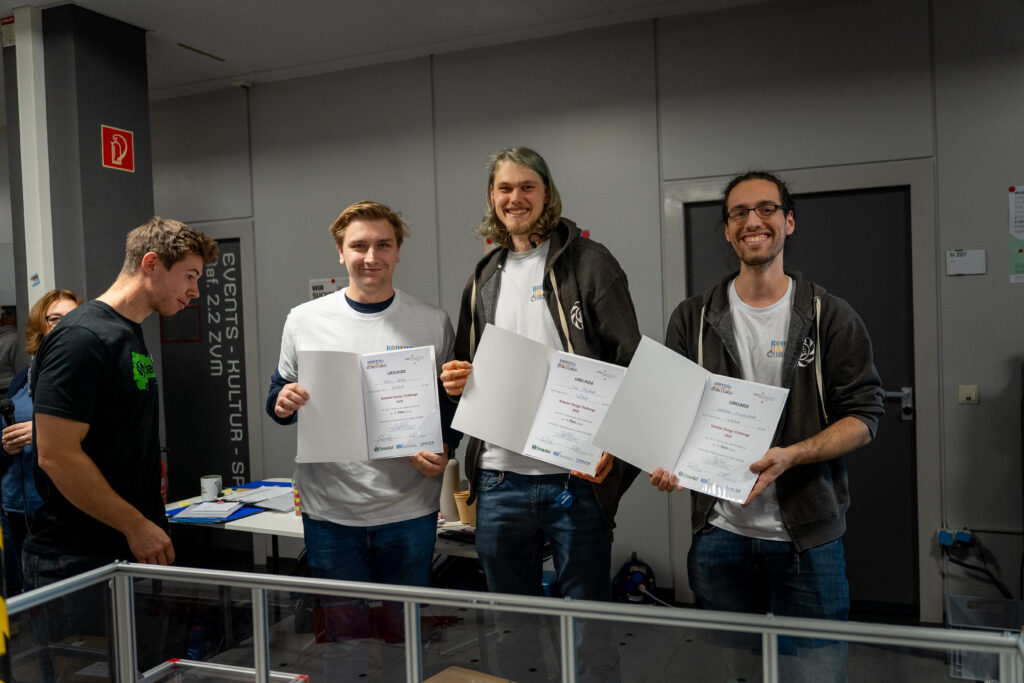
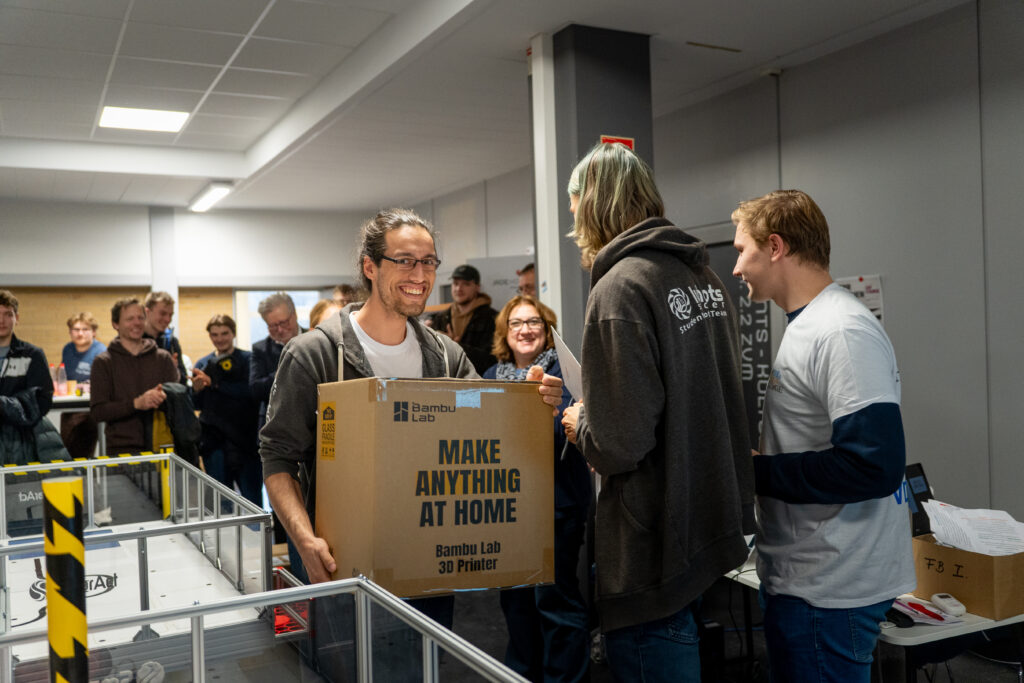
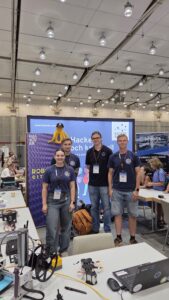
As the only external team, we did pretty well and even managed to come first overall!
Thank you very much for letting us take part again, even though we’re not students at Jade University of Applied Sciences! It was great fun once again! And, of course, many thanks for the brilliant prize: three A1 mini 3D printers from Bambu Lab!
You can find last year’s article here: Robot Design Challenge 2025